The circulator water bath has functionality with advanced temperature control technology. Its heater system includes stable thermal consistency, whereby each sample in the chamber undergoes equal heat exposure. The circulator water bath enables precise temperature setting and adjustments with an easy-to-use digital control panel. Its stainless-steel tank includes superior corrosion resistance and chemical reaction resistance. With built-in protection features such as thermal cut-off and water level sensing, the circulator water bath is all about performance and protection. It is best for regular lab applications and for certain scientific applications.

The circulator water bath is a valuable resource of laboratories in biology, chemistry, and clinical research. The circulator water bath is most commonly used for warming cultures, pre-warming reagents, softening substrates, and adjusting sample temperatures. In microbiology, the circulator water bath is applied to grow bacterial cultures at controlled temperatures. In chemistry laboratory facilities, it is applied to reaction kinetics and digestion reactions of samples. Pharmaceutical facilities utilize the circulator water bath for product testing and stability tests. Its precise temperature control yields consistent results, supporting research and quality control procedures.
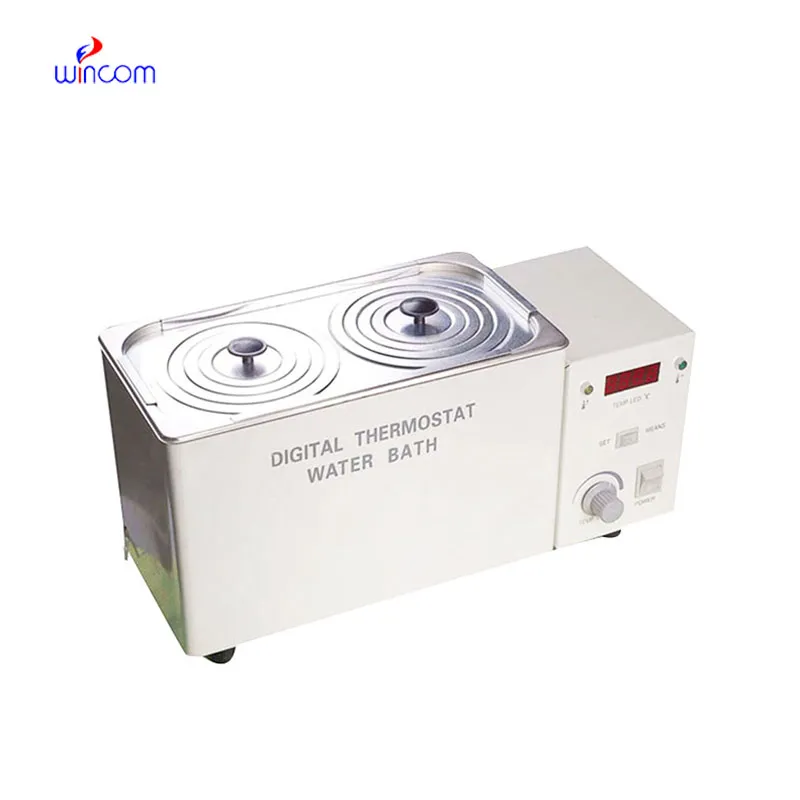
The circulator water bath will undergo dramatic innovation as the labs adopt more intelligent and more environmentally friendly technologies. New designs will have automatic adaptive thermal control that automatically calibrates to maintain accurate temperature specifications. Touch screens and remote access capabilities will enhance monitoring and ease efficiency. The circulator water bath will also aim at energy efficiency with premium insulation and intelligent heating equipment. These functions will render the laboratory instrument more integrated, efficient, and user-friendly.

Routine maintenance procedures need to be performed by the users to make the circulator water bath function properly. Clean the tank every week to remove mineral buildup or chemical residue. Scaling and corrosion are prevented through the use of distilled water. Dry parts completely after cleaning before filling up. The heating coil and temperature sensor should be checked for build-up or debris. Electrical components should not be submerged in water when cleaning. Proper routine maintenance makes the circulator water bath accurate, safe, and efficient to utilize over a long period of time.
The circulator water bath is a heat-controlled device from which researchers are able to maintain specimens at specified temperatures. The efficient heat transfer process of the device allows for uniform temperature throughout the chamber. In life science, chemistry, and food testing facilities, the circulator water bath is generally used in the processes such as sample incubation and reagent melting. With a strong focus on precision and safety, it has top-of-the-line thermal control to offer stable performance in a variety of different research settings.
Q: What makes a water bath important for laboratory precision? A: Its ability to maintain constant, uniform temperature conditions ensures reproducibility and accuracy in experimental results. Q: Can deionized water be used instead of distilled water? A: Yes, deionized water is also suitable, as it minimizes mineral deposits and supports cleaner operation. Q: How should a water bath be stored when not in use? A: Drain the tank completely, wipe it dry, and keep it covered in a clean, dust-free area to prevent corrosion and contamination. Q: What are common signs that a water bath requires maintenance? A: Slow heating, fluctuating temperatures, or visible residue in the tank indicate that cleaning or inspection is needed. Q: How can user safety be improved when using a water bath? A: Always use insulated gloves, avoid contact with hot water, and ensure the equipment is placed on a stable, dry surface during operation.
The hospital bed is well-designed and very practical. Patients find it comfortable, and nurses appreciate how simple it is to operate.
We’ve been using this mri machine for several months, and the image clarity is excellent. It’s reliable and easy for our team to operate.
To protect the privacy of our buyers, only public service email domains like Gmail, Yahoo, and MSN will be displayed. Additionally, only a limited portion of the inquiry content will be shown.
Could you share the specifications and price for your hospital bed models? We’re looking for adjus...
We’re interested in your delivery bed for our maternity department. Please send detailed specifica...
E-mail: [email protected]
Tel: +86-731-84176622
+86-731-84136655
Address: Rm.1507,Xinsancheng Plaza. No.58, Renmin Road(E),Changsha,Hunan,China


 EN
EN
 af
af
 es
es
 ar
ar
 tr
tr
 sw
sw
 pt
pt
 th
th
 ur
ur
 bn
bn
 ne
ne
 vi
vi
 km
km
 lo
lo
 de
de
 ru
ru
 fi
fi
 nl
nl
 fa
fa
 fr
fr
 ko
ko